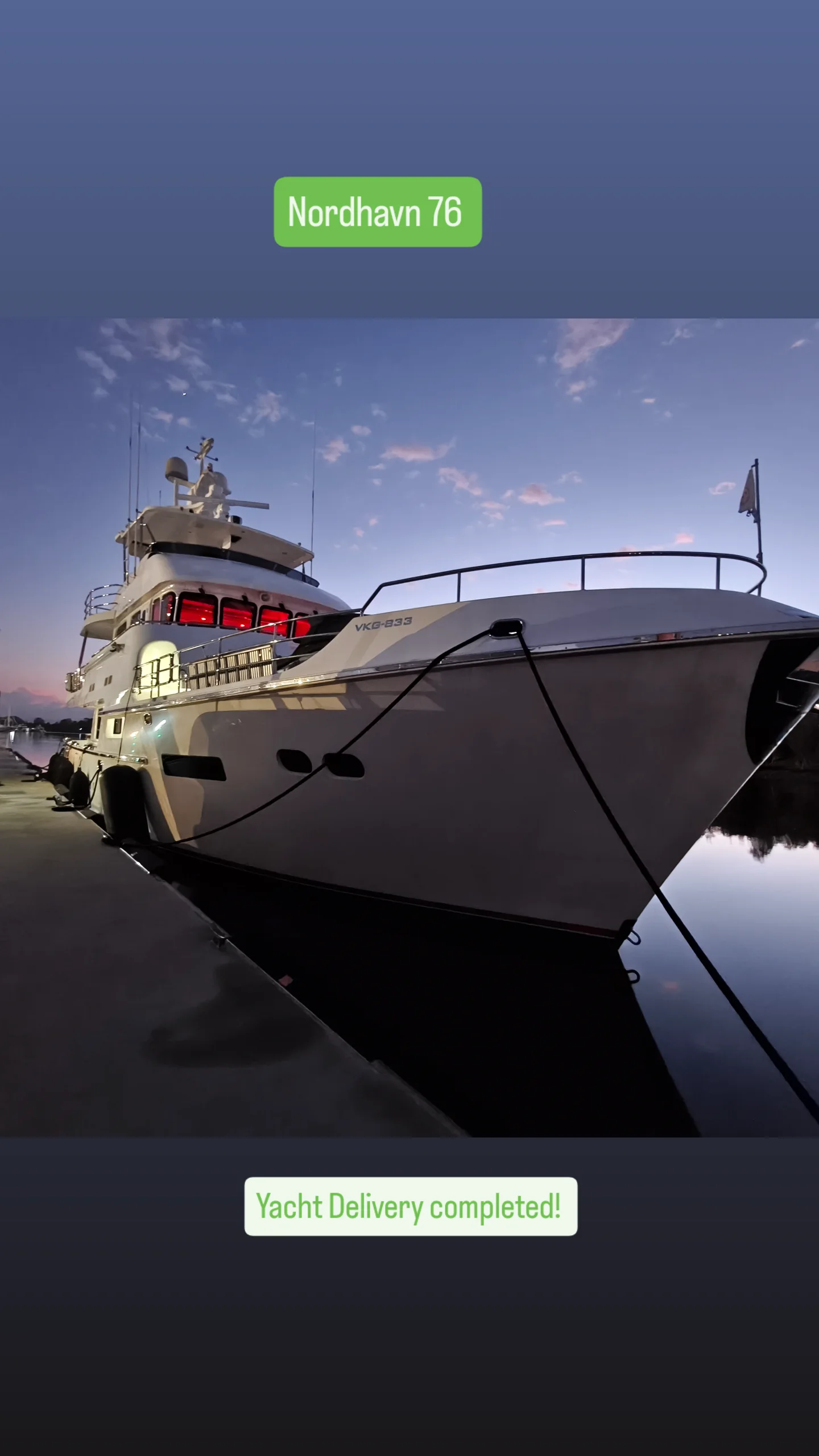
Departure – Hong Kong Start Point
The Hong Kong to Philippines delivery typically departs from established marinas such as Aberdeen Harbour, Causeway Bay Typhoon Shelter, or Sai Kung. These locations provide protected berthing, provisioning access, and efficient outbound clearance.
Preparation is focused on offshore readiness and weather timing. This route exits coastal waters and quickly becomes exposed to open South China Sea conditions. During the Northeast Monsoon, winds are typically NE at 15–25 knots, producing moderate to rough seas on a southbound track.
Navigation systems, AIS, and radar are verified prior to departure. Traffic density is high in Hong Kong approaches, requiring careful coordination during the initial phase. Clearance procedures are completed before sailing.
Passage – Routing and Conditions
The Hong Kong to Philippines delivery covers approximately 600–800 nautical miles depending on the selected landfall. Common destinations include Subic Bay or Manila.
Routing is generally south to southeast across the South China Sea. After clearing Hong Kong traffic lanes, the passage becomes predominantly offshore with limited diversion options.
Weather is the primary factor. The Northeast Monsoon often creates sustained headwinds and short-period seas. During inter-monsoon periods, winds are lighter but less predictable, with increased likelihood of squalls.
Tropical systems must be monitored throughout. Typhoon risk is significant between June and October, and routing must account for system development and projected tracks.
Traffic density reduces offshore but increases again approaching the Philippines. Fishing vessels, including unlit craft, are a consistent hazard near landfall.
Key considerations include:
- Monitoring monsoon strength and sea state
- Avoidance of tropical systems
- Offshore routing with limited shelter
- Continuous AIS and radar watchkeeping
- Increased vigilance near coastal approaches
Currents are generally moderate but influenced by seasonal wind patterns.
Arrival – Philippines Entry
Arrival procedures depend on the selected port of entry, typically Subic Bay or Manila.
Advance notice is recommended. On arrival, vessels proceed to a designated anchorage or marina for clearance. Formalities include customs, immigration, and quarantine inspections.
Processing may involve multiple offices and requires coordination on site. Once cleared, berthing or anchorage is confirmed.
Approach conditions are generally manageable but include local traffic and fishing activity.
Summary – Route Characteristics
The Hong Kong to Philippines delivery is a medium-range offshore passage defined by exposure to monsoon conditions and limited shelter.
Key operational features:
- Open-water transit across the South China Sea
- Strong seasonal wind influence
- Typhoon exposure during specific periods
- Reduced traffic offshore, increasing near landfall
- Structured but variable arrival procedures
Execution depends primarily on weather window selection and consistent offshore watchkeeping