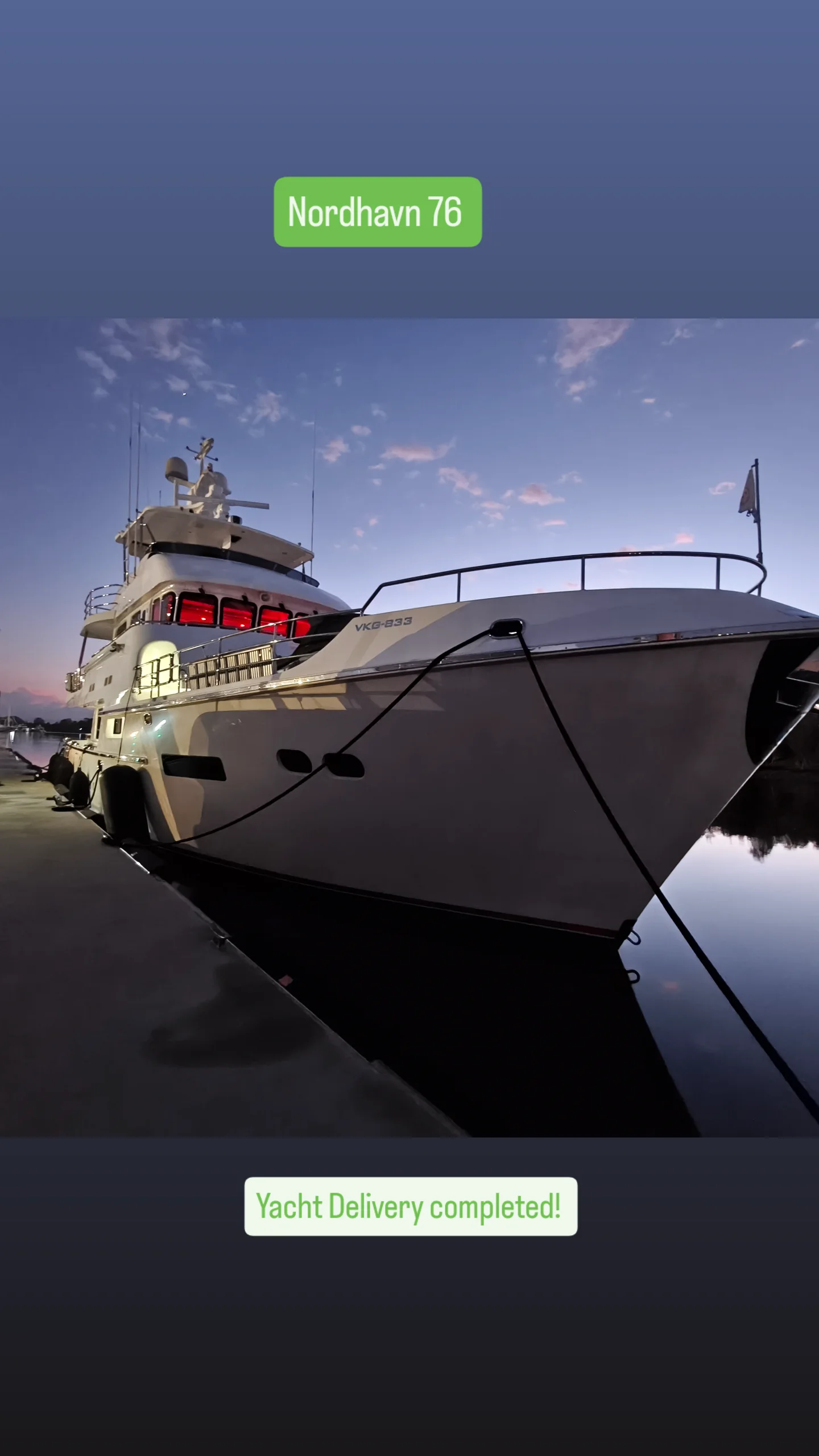
Departure – Darwin Start Point
The Darwin to Singapore delivery typically departs from Cullen Bay Marina or Darwin Waterfront, both of which provide suitable staging with access to fuel, provisioning, and outbound clearance. This route transitions quickly from coastal Australian waters into extended offshore conditions, requiring full passage preparation.
Pre-departure checks focus on engine reliability, fuel capacity, and redundancy of critical systems. Navigation electronics, AIS, and radar are verified prior to sailing. Weather routing is planned in line with the regional monsoon pattern. During the Southeast Monsoon (May–Sep), prevailing SE winds support a northbound track, while the Northwest Monsoon (Nov–Mar) introduces more variable conditions with increased convection.
Departure timing is coordinated with tidal flow in Darwin Harbour to avoid adverse currents. Initial conditions are generally moderate once clear of the coastline. Australian clearance is completed prior to departure.
Passage – Routing and Conditions
The Darwin to Singapore delivery covers approximately 1,800 to 2,200 nautical miles depending on routing and any planned stopovers. The passage is typically divided into offshore and archipelagic segments.
Initial routing crosses the Timor Sea toward Indonesia. From there, vessels commonly transit via the Lombok Strait or alternative passages depending on draft, conditions, and scheduling. Lombok is often preferred due to deeper water and more predictable traffic compared to the Malacca Strait during the early approach phase.
Weather is a primary consideration. Trade winds in the Timor Sea can generate consistent but sometimes steep sea states. Within Indonesian waters, localized effects become more prominent, including land breezes, funneling winds, and frequent squalls.
Currents are a defining factor in this region. The Indonesian Throughflow produces strong and variable currents, particularly in straits such as Lombok, where rates can exceed 3 knots. Transit timing is planned carefully to align with favorable tidal streams.
Traffic increases progressively throughout the passage. Offshore sections are relatively clear, but congestion rises significantly within Indonesian waters and further intensifies approaching Singapore. Fishing vessels, including unlit craft, are common and require continuous monitoring.
Key considerations include:
- Long-range fuel and provisioning management
- Monitoring monsoon patterns and squall activity
- Timing of Indonesian strait transits
- Continuous AIS and radar watchkeeping
- Identification of fishing activity near coastal areas
Night operations are standard offshore but require increased vigilance near land and in higher traffic zones.
Arrival – Singapore Entry
Arrival procedures into Singapore are structured and require advance coordination. Common marinas include One°15 Marina Sentosa Cove, Raffles Marina, and Marina at Keppel Bay.
Advance notification is required prior to arrival, including vessel and crew documentation. On approach, vessels must comply with Traffic Separation Scheme requirements and maintain communication awareness within port limits.
Clearance is completed at the marina, where immigration and customs formalities are processed. Berthing is pre-arranged, and assistance is typically provided due to confined marina conditions.
Conditions on arrival are generally calm, though traffic movement and wake may be present in outer approach areas.
Summary – Route Characteristics
The Darwin to Singapore delivery is a mid-range offshore passage combining open-water routing with complex navigation through Indonesian waters.
Operational characteristics include:
- Extended offshore transit across the Timor Sea
- Strong and variable currents in Indonesian straits
- Tropical weather with squall activity
- Increasing traffic density toward Singapore
- Structured and regulated port entry
Execution depends on fuel planning, weather timing, and consistent navigation discipline across both remote and congested environments.