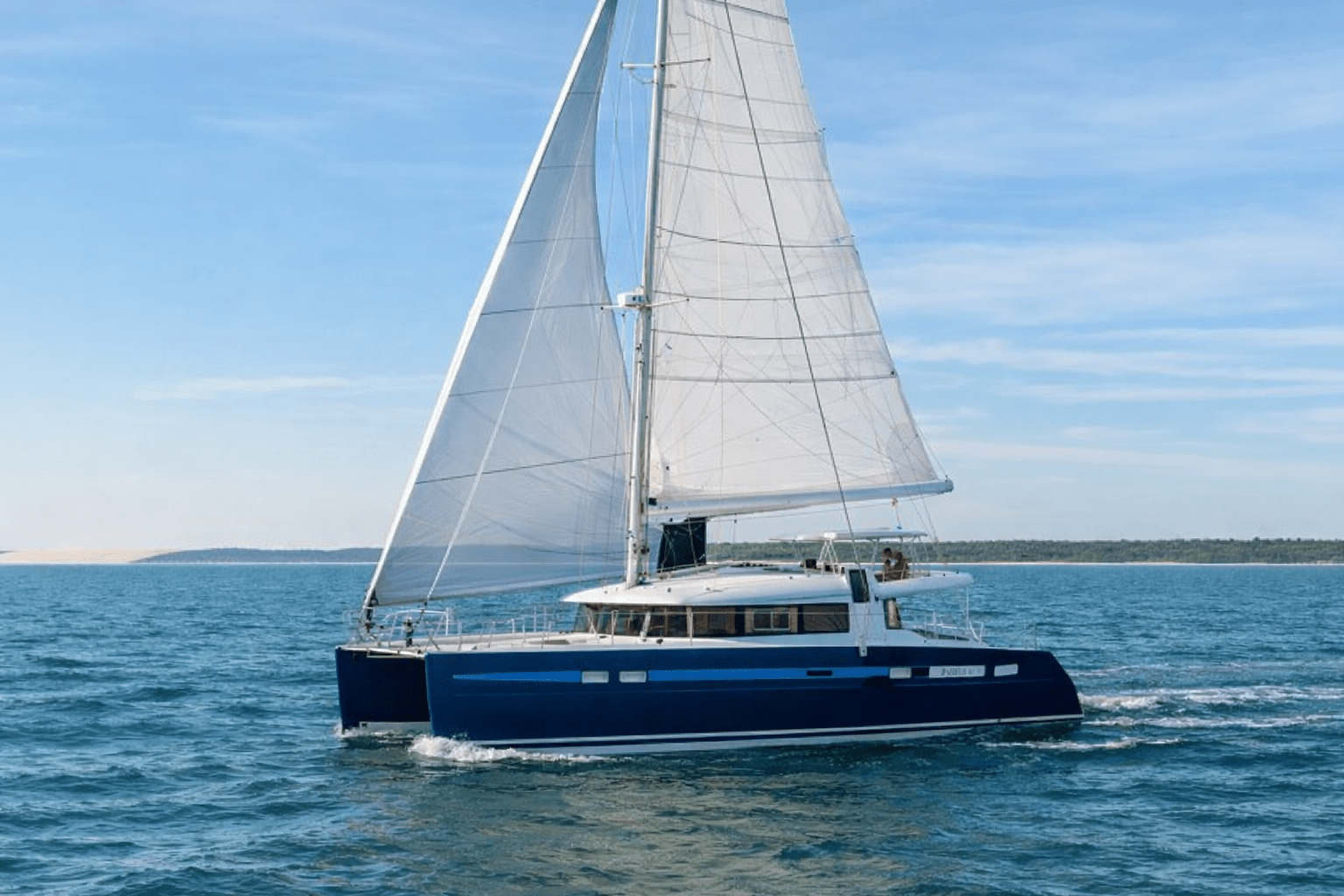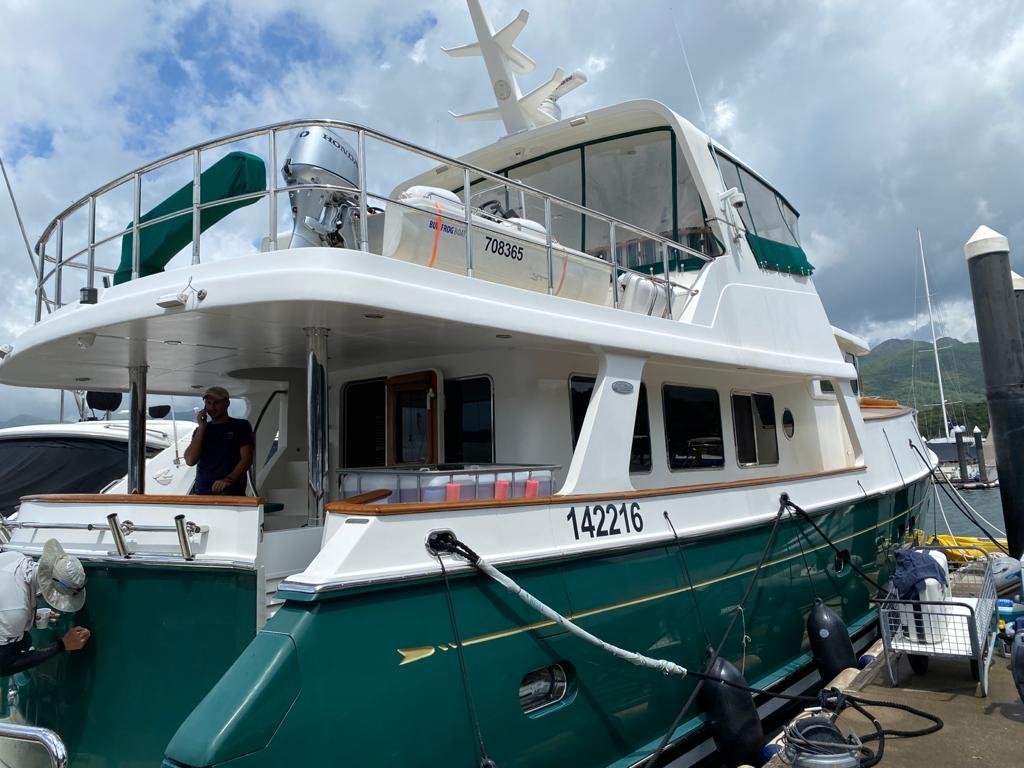
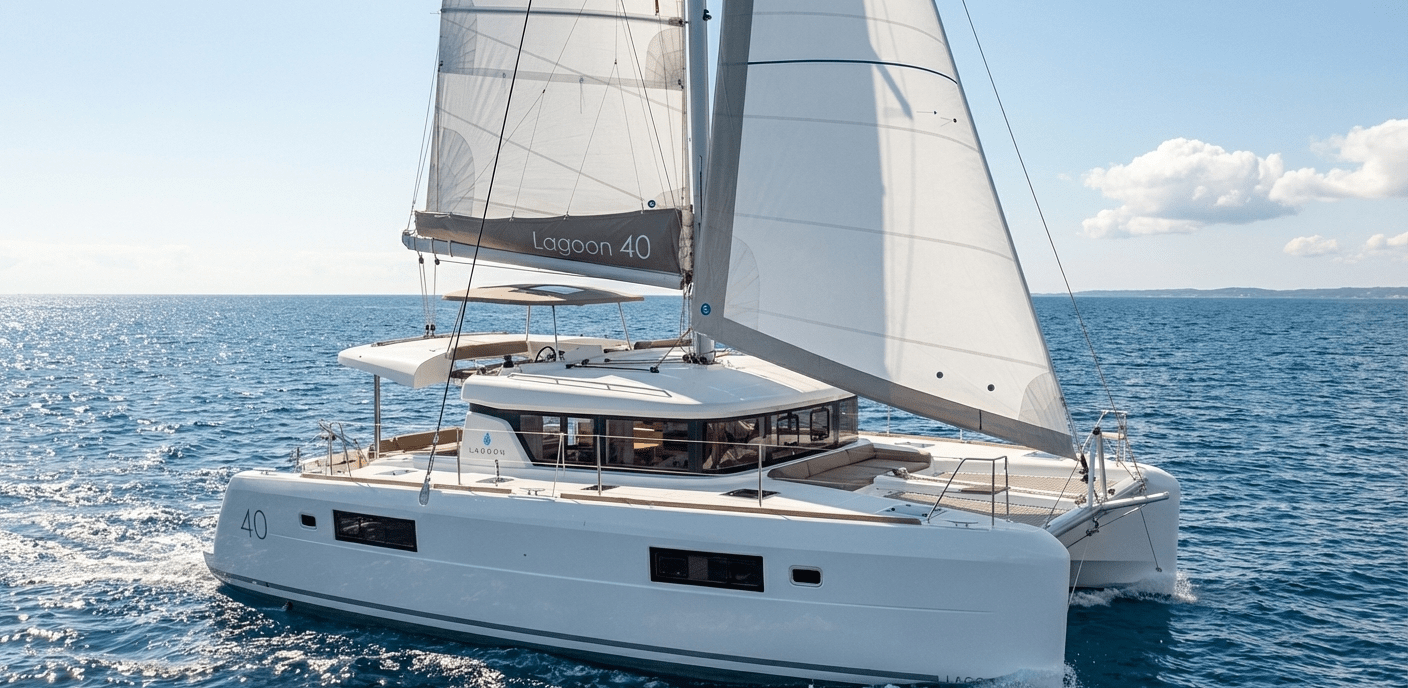
The Lagoon 42 from Phuket to Singapore delivery is a classic Southeast Asia passage that combines tropical weather systems, busy commercial shipping lanes, and diverse coastal navigation. This route requires disciplined planning, regional knowledge, and a vessel capable of handling heat, humidity, and variable wind conditions.
This delivery moved a Lagoon 42 catamaran from Phuket, Thailand, through the Andaman Sea and Malacca Strait, arriving in Singapore. While the distance is moderate compared to Pacific crossings, the complexity of traffic density and weather patterns makes this route technically demanding.
Yacht delivery in Southeast Asia differs significantly from offshore Pacific routes. Instead of long open-ocean legs, crews manage:
High commercial traffic density
Tropical squalls and monsoon patterns
Variable wind strength and direction
Heat and humidity affecting systems and crew
The Lagoon 42 from Phuket to Singapore delivery required constant situational awareness and conservative operational decisions.
The Lagoon 42 is well suited for tropical cruising and regional delivery work. Key characteristics that supported this delivery include:
Efficient twin-engine configuration for tight harbour manoeuvres
Shallow draft for coastal approaches
Wide beam providing stability in confused seas
Excellent ventilation for tropical conditions
These features make the Lagoon 42 a popular platform for owners cruising Southeast Asia or relocating between regional hubs.
Preparation in Phuket focused on tropical operating conditions rather than cold-weather offshore sailing. Key tasks included:
Engine servicing with attention to cooling systems
Electrical inspections due to humidity exposure
Rigging and sail checks for UV wear
Airflow and ventilation assessments below deck
Stocking spares commonly needed in remote Asian ports
Safety equipment was reviewed with emphasis on night navigation and collision avoidance, critical in heavily trafficked waters.
Local departure formalities were completed in advance to avoid delays, ensuring a clean exit from Thailand.
The route from Phuket to Singapore passes through some of the busiest maritime corridors in the world. Planning focused on:
Timing transits to avoid peak shipping traffic
Selecting overnight anchorages when required
Avoiding shallow fishing zones and unlit hazards
Adjusting speed to suit traffic separation schemes
Navigation relied on AIS, radar, and visual lookout at all times. Electronic charting systems were cross-checked using Navionics digital charts.
https://webapp.navionics.com/
Unlike bluewater passages, flexibility and real-time decision making were critical throughout this delivery.
Weather planning for the Lagoon 42 from Phuket to Singapore delivery accounted for regional monsoon patterns. Depending on season, conditions may include:
Light and variable winds
Sudden tropical squalls
Heavy rainfall reducing visibility
Short, steep sea states
Marine forecasts from the Singapore Meteorological Service and regional weather models were monitored regularly to anticipate squall activity and adjust daily runs.
https://www.weather.gov.sg/marine-forecast/
This approach minimized exposure during high-risk periods and ensured safe coastal navigation.
Crew operations followed short watch cycles due to frequent course changes and traffic monitoring requirements. Daily routines included:
Continuous AIS and radar tracking
Regular engine checks due to higher usage
Deck inspections after squall activity
Log updates and weather monitoring
Crew fatigue management was essential, as Southeast Asia routes require higher attention levels than open-ocean sailing.
Safety procedures for this delivery emphasized collision avoidance and situational awareness:
Dedicated night watches
Continuous AIS operation
Radar guard zones
Pre-planned escape routes
Daylight-only port entries where possible
These measures are standard practice for professional deliveries in the Malacca Strait and surrounding waters.
The Lagoon 42 performed reliably throughout the passage:
Engines operated smoothly under extended motoring
Sail handling remained efficient during light-wind periods
Motion remained stable despite confused seas
Interior comfort supported crew recovery
The catamaran’s layout and system redundancy were well suited to the demands of Southeast Asian navigation.
Arrival into Singapore required coordination with port authorities and strict adherence to entry procedures. Final checks included:
Engine and system inspections
Log and fuel usage review
Equipment condition assessment
Owner handover documentation
The Lagoon 42 arrived in excellent condition, ready for marina operations or onward cruising within the region.
For owners operating in Southeast Asia, the following internal guides are useful:
Our Asia Yacht Delivery Services overview
Crewed Yacht Delivery in Asia guide
Yacht Insurance for Asian Waters resource
These articles provide region-specific insights for safe and efficient yacht operations.
The Lagoon 42 from Phuket to Singapore delivery demonstrated that:
Regional knowledge is critical in Asia
Traffic management is as important as weather planning
Catamarans perform well in tropical coastal routes
Professional crew coordination reduces operational risk
Southeast Asia yacht deliveries demand a different skill set than offshore crossings. The Lagoon 42 from Phuket to Singapore passage highlights the importance of preparation, adaptability, and local expertise when operating in some of the world’s busiest waterways.
For owners planning regional relocations, professional yacht delivery ensures safety, compliance, and peace of mind throughout the journey.